Toronto Threads: How Diversity Weaves Toronto’s Fashion Culture

-By Letu Mokonin
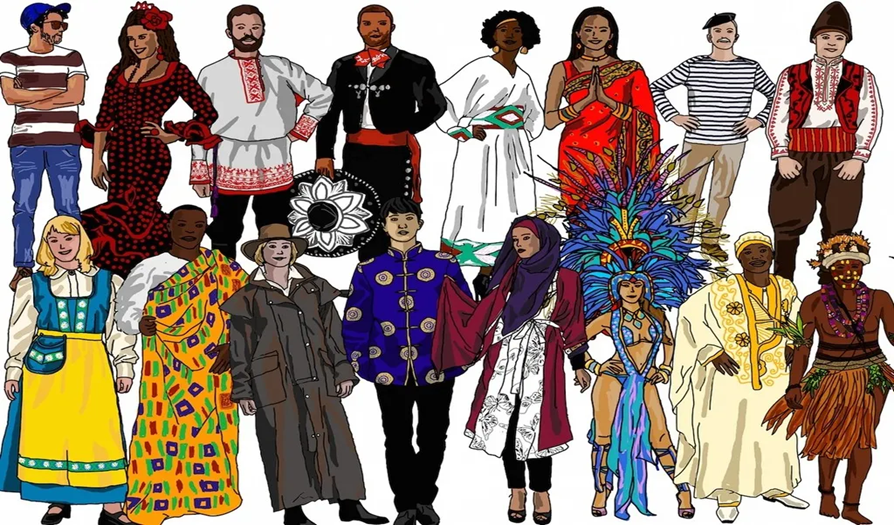
Illustration of cultural diversity, courtesy: Medium.com
Toronto's fashion scene doesn't follow a single trend or aesthetic. Instead, it tells a thousand different stories at once, each one reflecting the diverse cultural tapestry that makes this city unique. From the vibrant thrift stores of Kensington Market to high-end boutiques and fabric shops in the Fashion District, Toronto's style is as diversified as its people.
Toronto: The City of diversity
According to the Canada Census statistics, 46% of the population of Toronto are immigrants. Toronto is often cited as the most diverse city in the world, with nearly half of its population being immigrants. This statistic is something that can’t go unnoticed in the streets of Toronto, it's woven in the many faces and ethnicities you see, the many cuisines from all around the world and of course, it’s seen in the clothes people wear. While many unique neighborhoods have their own identity throughout the city, the fashion district is the melting pot that defines the city's fashion identity.
The Fashion District: Where Cultures Converge
At the heart of Toronto's fashion identity lies the Fashion District, a neighborhood where creativity and cultural exchange happen daily. Walk into Leo's Textiles, a fabric store that serves as a microcosm of the city itself, and you'll understand what makes Toronto different.
"They come to the fabric store because they want something to make to their own liking," explains the store owner.
These stores are all over the city and thriving as they encourage individual expression while celebrating cultural heritage, representing the theme of Toronto's fashion culture. It's not about conforming to a single aesthetic. In the city of Toronto, it’s about creating a safe space for everyone's identity and heritage to be told through clothing. Whether someone is recreating a traditional garment from their homeland or designing something entirely new that blends multiple influences, these fabric shops provide the raw materials for Toronto's diverse fashion stories. The Fashion District becomes a starting point where cultural preservation and creative innovation begin, setting the tone for the city's broader approach to style.
Kensington Market: The Heart of Experimental Style
Just steps away from the Fashion District's fabric shops lies Kensington Market, a neighborhood that has become synonymous with Toronto's alternative fashion scene. Here, sustainability meets self-expression in vintage shops filled with treasures from every era imaginable.
"Eccentric, experimental. I feel like everyone is doing their own thing, but does it well," one local resident describes the neighborhoods' style. Another adds, "I like to pull together different parts of different fashion, like having something whimsical or having something more punky or something and like bringing it all together."
Lost Gen Vintage, a staple in Kensington Market, embodies this philosophy. A worker there observes that Toronto has "a very scattered street style. You can look around and see someone in every different outfit you can ever imagine."
The emphasis on thrifting in Kensington isn't just about aesthetics; it's about values. "I think it's good, I think it's sustainable, and I think it's good to support local businesses," the Lost Gen worker notes, highlighting how Toronto's fashion consciousness extends beyond appearance to encompass environmental and community concerns.
Fashion District: The Luxury Perspective
Not far from Kensington's vintage havens, high-end boutiques tell a different story about Toronto fashion. Alex, owner of a longstanding fur coat shop, offers a candid assessment of the city's relationship with luxury fashion.
"Toronto is a wonderful city, wonderful people, but for its fashion, we could be a little bit better," he admits. "I know a lot of boutiques in Bloor and Yorkville, and they all say the same thing. We all pretty much rely on tourism. A lot of Americans, a lot of Europeans come up, they like to buy luxury items, without them, it's very tricky to wait for locals to support you."
Alex points to fast fashion as a significant challenge, noting the prevalence of brands that prioritize quantity over quality. Yet he remains optimistic about changing attitudes, particularly among younger generations here in the city.
"There's a young generation that wants good stuff. They're getting grandma's coat out of her closet, because they know it's a quality piece of work," he explains. "They're bringing it out of the closet. They're coming in for repairs. We're redoing it, and they want to wear something; They don't want to wear plastics, and that's good to see."
This generational future shift in Toronto fashion may not be built on luxury retail in the traditional sense, but rather on a renewed appreciation for craftsmanship, longevity, and the stories embedded in quality garments. People are valuing quality clothes, finding them from high-end boutiques or their grandmother's closet.
The Next Generation: Fashion Students Shaping Tomorrow
At Seneca College, young designers are already creating the future of Toronto fashion, drawing inspiration from the multicultural environment that surrounds them. Students from Hong Kong incorporate elements of traditional qipao into their work, while others blend Japanese and Chinese street fashion influences with their own cultural backgrounds.
"In this class, we have a lot of people from different countries, and so I have seen the other students illustrating different cultures. I’m from Hong Kong, so kind of Chinese culture. I like qipao, cultural from the Qing dynasty. It’s 100% silk. It’s very elegant,” one student explains.
Another student shares;
"I am a big fan of Japanese street fashion and Chinese street fashion, so I do take inspiration from those two cultures a lot, but I do really love seeing fashion from all over the world."
These students represent Toronto's fashion future; they are designers who don't see cultural boundaries as limitations but as inspiration. Their work demonstrates how the city's diversity isn't just a stagnant backdrop but the active ingredient in shaping the future of Toronto fashion.
Teaching fashion in a multicultural city
The Seneca fashion classroom has become a space where cultures don't just coexist, they actively influence and inspire one another. Fashion professors Rushmita Alam and David Dixon see this cultural exchange as Toronto's greatest strength. Professor Alam emphasizes how the city's diversity directly shapes its fashion landscape.
"Toronto is a very diversified city, and Canada is a very diversified country, and definitely culture is one of the main things in fashion, so fashion is always heavily influenced by culture, different culture, different people," she explains. "When I see someone in the street wearing something, that's the fashion spirit. I see something good, I wanna adopt it, culture also spreads."
What makes Toronto particularly special, according to Professor Alam, is the freedom people have to express their cultural identity through clothing. "In a lot of places in the world, you are not that comfortable wearing your own identity, so I think that is a big thing in Toronto that we are comfortable and we are safe and that reflects on our fashion as well."
Professor David Dixon adds another dimension to this perspective, noting the responsibility that comes with such diverse cultural access in the city. "I grew up being influenced by so many different cultures, where my friends and social group all came from different areas. How can we not be influenced by walking one corner and being in Koreatown and the next, Little Jamaica. So in terms of influence, they do play a part, but we have to be very cautionary in terms with how we get inspired by that."
A Fashion Identity Built on Inclusion
Toronto's fashion scene may not have the singular vision of Paris or the trendsetting reputation of New York, but it has something arguably more valuable: authenticity rooted in genuine cultural exchange and as a young, diverse city, it's creating a fashion identity built on genuine multicultural exchange that's still actively evolving. While established fashion capitals are known for what they dictate to the world, Toronto is defined by what it welcomes from it, and this openness is shaping a promising new model for global fashion. Alex, the fur coat shop owner, acknowledges the city's current position candidly when he admits Toronto can be better, and the answer is clear that it is evolving for the better. Toronto's relative youth as a fashion city is precisely what makes its future so promising. Where centuries-old fashion capitals are constrained by tradition and established hierarchies, Toronto's identity is still being written by immigrants in fabric shops, students in design classrooms, sustainability-minded thrifters, and a generation increasingly investing in quality over quantity.
"Slowly, slowly things are changing," Alex says.
The evolution of Toronto fashion culture is in action, but Toronto isn't trying to become the next Paris or New York; it's pioneering something entirely new of its own. A fashion capital where diversity isn't just aesthetic inspiration but the very foundation of its identity.
From the fabric shops where immigrants recreate garments from home to the thrift stores where sustainability meets style, from luxury boutiques preserving quality craftsmanship to college classrooms where the next generation experiments with cross-cultural design, Toronto fashion is a living reflection of the city's values and diverse identity.
The City's Values
These conscientious values extend beyond the acceptance of self-expression; they can even be seen in the sustainable fashion that Torontonians gravitate towards. Entire neighbourhoods like Kensington Market are dedicated to thrifted clothing, along with the trend from younger generations' gravitation toward high-end, more durable clothing over fast fashion. The city's fashion culture reflects this ethical mindset not only in how well they treat one another's fashion expressions, but also in a broader ethical approach to the environmental impact of their clothing choices. Seeing the diversity of both thrifted and high-end street wear throughout the streets is a reflection of the city's commitment to self-expression and responsible consumption
Culture Celebrations
While sustainability reflects Toronto's values in individual fashion choices, the city's cultural festivals reveal how those values extend to the collective celebration of diversity. Throughout the year, Toronto streets turn into runways for heritage expressions. As Toronto is home to a large Caribbean population, it's famous for its Caribana festival that shows hundreds of elaborate, colourful, feathered costumes.
Vibrant saris and lehengas during Diwali, the red and gold qipaos that mark Lunar New Year or white and gold habesha kemis during Ethiopian New Year. These festivals represent more than annual traditions; they're economic ecosystems supporting local designers, seamstresses, and fabric shops who create both traditional and contemporary interpretations of traditional dress. The preparation alone reveals Toronto's fashion values, families investing in quality garments meant to last generations, young designers modernizing traditional silhouettes, and communities gathering to create elaborate carnival costumes together. What makes Toronto's festival culture unique is how it influences the broader fashion landscape.
Fashion expert Navarro Delgado sees this cultural exchange at festivals as part of a larger, ongoing transformation of Toronto's fashion identity.
Toronto fashion culture
Toronto fashion is about creating space for every voice, every culture, every individual expression to coexist and influence one another. In Toronto, you can see many women wearing hijabs or Ankara turbans on Sunday mornings, or a cultural heritage dress to celebrate the latest heritage festival in the city. You find in every street people who wear a luxury fur coat, or a thrifted leather jacket, an outfit inspired by Japanese street fashion, or a fusion of two distinct cultures and all of these are equally valid expressions of the city's fashion identity.
As the city continues to evolve, one thing remains constant: Toronto's fashion isn't just about what people wear. It's a reflection of a unified multicultural community where diversity isn't just accepted, it's celebrated, worn proudly, and woven into the very fabric of the city.


Comments